Showing posts with label critical theory. Show all posts

Monday, December 30, 2013

Kuchar in 3-D

So, a couple years ago the Hollywood King of 3-D, Ray Zone, gave the Godfather of Queer Cinema, Mike Kuchar, a 3-D camera. Let me take a little step back. Ray Zone was probably the single biggest advocate for Stereoscopic 3-D imaging that could ever be compiled in a living being. He was very positive, loveable and really interested in everything you had to say.

I was opening my semi-secret gallery and screening space in the dark corner of Skid Row in LA. My very first film screening was a selection of Mike Kuchar's videos. I flew him to LA and set him up in my apartment/gallery. It was his first time to LA in almost 3 decades. It was a great show with a full house including Mr. Ray Zone. I believe it was the first time Ray had seen Mike's work, but he knew of Mike's reputation. Ray being the generous person that he is and also always trying to spread the gospel of 3D gave Mike the new Fuji W3 Finepix 3D camera telling Mike that he "just wanted to see what he would do with it".

Mike graciously accepted the camera and when he returned to his home, San Francisco, he began making plans to start on a new project. Mike shot a few scenes with some of his regular stars, but at a certain point he simply had to abandon the project. You must understand, Mike is a very traditional filmmaker. Sometime in the 80's he transitioned from film to video and later still he transitioned to digital video tape. All of these processes are radically different and each transition took many years for him to master. Now, in his 70's, he seems reluctant to make the transition to digital video files (SD card) based footage. This is due mostly to the fact that he has no computer and no way of editing the footage.

The camera sat on the shelf with the footage for months. It sat as Mike witnessed his brother, George, fight his battle with cancer and lose. It sat for another year when Ray unexpectedly suffered a heart attack and left us with endless questions.

Eventually, Mike decided to give me the camera. He knew I worked in 3D and lucky for us all the footage that Mike shot was still on the card in the camera.

I started working on the footage, but quickly realized that even though the W3 camera is revolutionary in putting 3D easily into the hands of anyone it still has many bugs. With this camera there is a problem with the alignment of the two images and for 3D that is an enormous problem. It's basically the difference between seeing 3-D and giving everyone a headache. So, I spend much time fixing the footage to prepare it for editing.

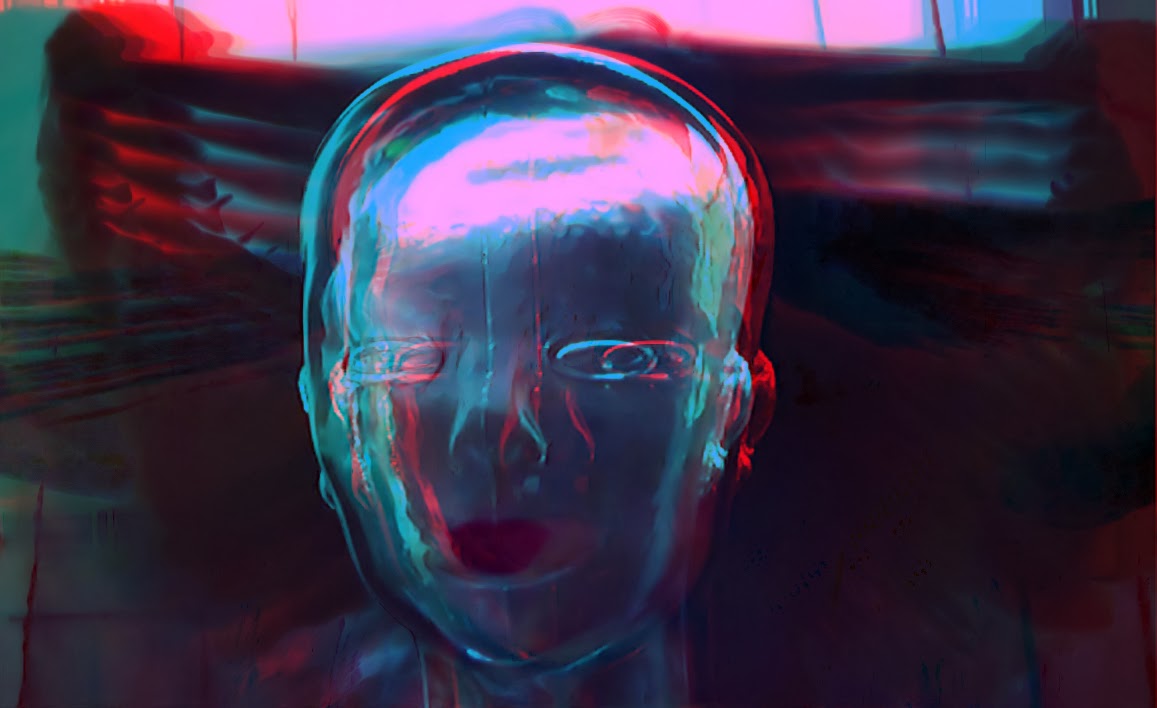
Now I am finally at the stage of editing. It's still going to take more time, but for now I have a few images for you to see - to be viewed in anaglyph (red-blue) glasses.  Not perfect, but getting there.


Sunday, February 10, 2013

Movie palaces

Well, I'm already behind in my project for the Echo Park Film Center's LA AIR (artist in residence) program.  I have until Feb 28th to make a film.  I'm working with my buddy Ale again and he's made a great soundtrack.
I've shot just about everything I need (I think) and I'm editing.  I had to scrap the idea of shooting entirely on Single-8 fuji film, but I still shot some stuff on Single-8 and I'm waiting for it to get back to me.  Yet, I have to say every day that passes I'm less hopeful I'll get the footage in time to use it (and I even gave them a cool Kodachrome pin when I returned my footage - Retro8.com have been a huge hassle).

Well, now I am editing and thinking how daunting all my animation and FX work will be.  I want to add all the missing marquee sign and neon lights to what is up to 7 minutes of footage, but will likely be closer to 10 minutes.

These are the images I'm referencing.  The theatres include the Mason, Orpheum, Loew's State, the Philharmonic Auditorum, Olympic and Tower (during the Newsreel days).

Philharmonic Auditorum

Philharmonic Auditorum

Orpheum


The Philharmonic Auditorum has one of the most elaborate signs and lights of any of the downtown LA movie palaces.  It's actually really hard to tell from some pictures but the roof top sign is shifted back by about 20 feet and on the East most building and so it's just right of where you would enter and all the lights go up the building.  A little strangely positioned.


The Orpheum was originally a Vaudville house.  And the rooftop marquee used to have that in the title.  It also used to face both East and West because the old Central Station where people would get off after spending the last 3 days traveling from New York, Chicago or somewhere else was located directly East of here.  In the 30's Union Station was built where Chinatown was, Chinatown moved and so did a lot of interest in entertainment and business.  Lucky enough the Orpheum was restored and looks amazing.  But the "Vaudville" part is gone.


 The State used to be called "Loew's State".  Yes, the same as the Loew's theatre chain originally established by Marcus Loew.  The building used to have a sign that ran up to the top and a couple different entrances with signs directing you to them.  It was quite elaborate.
 The Mason was originally an Opera House back at the turn of the last century.  Later it became the first cinema in LA to be exclusively Mexican Cinema.  Now?  It's that giant hole of a block next to the LA Times building - ugly, stupid and anything would be better then that...even a parking lot!

A less remembered cinema, was not on the Broadway strip, but still interesting and found itself in a few movies over the decades.  The marquee is still there.  The building facade has changed (for the better), but the marquee is painted almost completely black.  It seems obvious that the owner wants to get rid of it.  Kinda sad.

 This is a quick mock up of how I want to put the Loew's State together.

And here is a postcard I made and came out with a nice fake neon and florescent glow look that I'm going to use for the actual film.

So, I have a lot of work ahead and I might not finish in time, but I think whatever I do get done will be amazing.

Thursday, January 3, 2013

Artist in Residence

In February I begin my AIR (Artist in Residence) at the EPFC (Echo Park Film Center).  I have a lot of things I'm preparing for this right now.  So check back for updates.

For now keep in mind I will have a screening with a few films including a brand new one I will be completing for this residency, which will take place on Thursday Feb 28th.

I will also be hosting a workshop on film projection and expanded cinema on February 23rd starting around noon.  As a projectionist for over 10 years and the current head projectionist at RedCat you might learn a thing or two ;)  I'll also be discussing some of my secrets of when I do live visual or expanded cinema performances.

Saturday, August 4, 2012

Internal and External perceptions of LA

"I just want to be in a swimming pool, eating tacos and signing autographs" - "The Smithereens" the movie one of the down and out character's says about moving to LA while living in a scummy basement apartment in the Lower East Side of Manhattan.

They say that when you visit Venice, Italy you need to arrive at it by the sea.  Venice is a magical place where all your romantic impressions from movies and history come true.  And this perception is solidified if you literally approach it properly. I, on the other hand, arrived to Venice for the first time by train.  Which means I passed through Mestre before I got to Venice.  Actually, my hostel was in Mestre and I stopped off and walked around that city for a couple hours before departing for Venice.  If Venice is a magic dreamland then Mestre is an industrial nightmare.  Most cities have a mix of "nice" qualities and necessary, but "ugly" qualities, but when faced with a place that needs to exist as a fiction then all the necessary aspects of it get shoved into a nearby area and the local commerce tries as much as possible to get visitors to ignore it.  Or sometimes, like in the case of North Vegas, be afraid of it.
Still, I was absolutely glad I went through Mestre and got a chance to see what a completely rejected working class construction zone was like where there is practically nothing "nice" or "beautiful" about the entire place.  I guess it might seem strange, but I have never really agreed with most of society on these terms of "beauty", "good", "prosperity", etc.  Often I find things that are supposed to look beautiful to actually look very ugly and visa verse.  This particularly true with modern architecture.  As one of the last created cities on earth Los Angeles as some of the most diverse architecture and it can change dramatically within a span of 10 feet.

One of the most apt and concise descriptions of the conundrum of LA I found in a somewhat creative bureaucratic text book from 1955 titled  The Metropolis: Is Integration Possible? which is part of the series Metropolitan Los Angeles - A Study in Integration [the entire book is quite facinating because it give eloquent and complex descriptions for a purpose that is clearly supposed to be quite dry given chapters titled "Local Governments - Your Concern", "Water Supply - Your Heritage", "Protective Forces - Your Safety", etc]:

"Los Angeles and its environs are many things to many people.  The metropolis spreads out across the coastal plain and its surroundings valleys in a turning areas, farm lands and orchards, industrial centers and oil fields.  No other metropolitan area in the United States, or perhaps even the world, is so diversified and decentralized.  Consider the dilemma of the visitor from New York or Chicago who is completely at a loss because he can find no particular place to pause, as in Time Square or The Loop, and say to himself, 'This is Los Angeles'."

With such a short history as a city Los Angeles approaches itself in a very "modern" way.  If cities were humans who had personalities then Los Angeles reached adolescence and its most influential time period in the 1950's.  The biggest explosion of the cinema industry, automobiles, suburbs, microwave dinners and disposable products.  It is a disposable city.

How can a city express an adjective such as disposable? If you spend any time in virtually any city that is older then LA you quickly notice that there are a lot more older and classic buildings then in LA.  However, often, especially in California, many buildings are not necessarily older then LA, but they are much more cared for.  Simply spend some time in downtown Los Angeles and you can see a dozen buildings that are over 100 years old.  There are a few, like the Eastern Building, that are pristine and well cared for, elegant, beautiful and decadent.  However, there are hundreds of others that are decaying, rotting and falling apart.  Why?  It's quite easy.  Just like the City Market of LA (which I describe in a previous entry) many buildings in LA develop a certain amount of decay where it becomes more of a nuisance to repair then it is to destroy entirely and rebuild a new building entirely.  It a way it's a perpetual process.

Let's take a recent example at my armamada, the University of Southern California.  Just a few years ago they constructed a new Building for the Cinema School.  The Lucas building.  This was to replace the old Lucas building (both created from huge donations from, you guessed it, George Lucas).  The old building was only built sometime in the 80's, but just over 20 years later the University needed to fix so much in the building and, according to the Dean, there were so many new restrictions in relation to earthquake safety that it was cheaper and easier to just tear down that building and build a new one all together.  So, now the old building is just a memory.  It is disposable. Get rid of the old to make way for the new.  When the old is just out of style that it's an eyesore and just before it becomes beautiful again as a historic relic.

So, this is what real estate developers do.  They wait for a building to die, in a sense.  They want a building to become an eyesore (or become a hazard) in some cases for much older buildings that have a historic value to it.  That way they can bypass city laws forbidding destruction of historical landmarks.  It might take 5 or 10 years, but eventually they will have their way and the city looses more of it's historic culture and instead is replaced with the cookie cutter machine of big industry where everything should look the same. Every Walmart looks the same, every high rise, every 7-11 and eventually everything will look and be the same.

Enjoy it while we can.


Wednesday, June 20, 2012

Obituary for the LA City Market

For those who don't know. The most amazing complexes in the entire city of LA is the City Market of Los Angeles. This is the long giant two square block complex of loading docks that appears to be at least 80 years of age. Surrounded by San Pedro, 9th, 11th and San Julian streets the complex is one of the most negelected, over used and amazing constructs. More then anything this building represents the beauty of collective construction, neglect and pieced together necessity. More specifically the entire place was originally used for loading and unloading of goods. Huge trucks would move in and out during the peak of it's life time.  There were a few major accidents and thousands of minor accidents most were left as is and only a few times did the owners decide to try fix any damage done.

It was originally build to house businesses and make it easy for trucks, vans and other vehicles move in and out.  Chances are there were at least a few dozen deaths and maybe even one or two murders within the life of the premises.  It also appears that there there a few different parts of the building that once had extensions to it.  Therefore, there are some walls and doors that were once interior, but for some reason or other a part of the building needed to come down and now the wall or door was exposed to the outside world when it was not intended to.
The image to the right is a perfect example of a walk-in fridge door that was no longer in use and mix of laziness necessity to keep the door permanently closed someone decided to use a 2x4 to block it off and the need to mask the wall as much as possible by painting it the light camouflage green in order to conceal the door just enough so that people won't casually notice.  In a way this turns into that "truth is stranger than fiction" or I would call it "accident is more beautiful than art".  What artists in their right mind would even think of creating a door and even creating a door in such a fashion?  And yet I have never seen anything so beautiful.

So, now in it's latter years with an inch thick layer or rust and it's 10th coat of paint the owners have decided to tear it down.  It's age has reached the eclipsing point where the asphalt that was crudely added in the 60's or 70's has worn away enough for the elegant tiled brick ground to peak through and just a tiny amount of the old railway has shown through as well.  Now the complex if half gone.  The amazing Art Deco sign has turned in to a vulgar Billboard and the cranes have already ripped apart the entire north corridor of the complex.

In speaking with one of the owners I mentioned that this is one of my favorite places in LA he replied "Ya, but it's unsafe."  And it was the most obvious explanation that made me realize and masochism of my aesthetic appreciation.  Reason why I love this place is 1) because if has an old classic look to it (in a strange way it's like being in Italy - but this is a totally different time period) and 2) it's totally neglected.  There were hundreds of thousands of decisions that lead to people decided to clean something up either in a half-assed fashion or deciding not to fix something at all!  AND this is the very reason why it must be destroyed.  There is simply no way for this space to be usable and safe.  It's like an old dog that you love, but it's so old that it's body hurts by just existing.  You can't be so selfish to keep it around when it's in so much pain.  It must be euthanized.  Still, I'll always wish I had more time with it.

When I first saw that space I knew I wanted to have a crazy huge installation of art, video projections, DJ's - just one crazy huge festival of art and music. Certainly, the best time to visit is night. Unfortunately, that will have to be left to my dreams.

Good-bye, old friend.

Friday, June 1, 2012

Forgotten City

The Southland.  City of Industry. La La  Land. City of Angels. There are very few cities that are discussed regularly in a metaphysical context.  New York, Hiroshima and Nagasaki, Chernobyl, Jerusalem, Las Vegas, DC and possibly one or two others.  But there is only one city that is pretty much only refered to in a metaphysical manor which is simultaneously alluring and revolting.  Los Angeles is a city that seems to bring out the extremes in people.  You either love it or hate it and any emotions in between is left to Pasadena or Orange County, the Valley or possibly Long Beach. Certainly a significant amount of discourse has been created to try and define or explain the phenomenon that is Los Angeles.  Thom Anderson creates a brilliant picture of this in his film "Los Angeles Plays Itself" by stating that to the outside world there is no difference between "Hollywood" and "Los Angeles", but within the cities confines there is a radical difference.

Paul Arthur describes LA with an analogy by stating that "nowhere in America are the imperative of high and low culture so blurred."  There is certainly something to that.  If we split things into two camps with vulgarly obtuse terms such as "Hollywood" and "other art forms" within this city - like music and fashion.  Hollywood equals pop-culture movie making, commercial advertising and artificial representation spectacle.  "Underground" art forms of music and fashion thrive in this city, but if an individual from music or fashion is introduced to a "Hollywood" interaction they will certainly jump at the chance and in a way they end up reinforcing larger subtext to this city that is semi-conscious, but not always obvious.

This city screams pop-culture.  If you do not support nor idolize pop-culture you might as well not exist.  "Hollywood" is an overwhelming place. On a clear day the sign can be seen all the way down to South Central, Inglewood, Watts and Hawthorne.  The shadow looms over all parts of the city and those that are born here feel the intense class divide and, in a way, they idolize pop-culture that much more because of it's dark shadow and it's unattainable status.

This creates a very strange paradigm for those who have either no interest in popular culture or are strongly opposed to it.  By no means would I consider someone in this outsider camp any kind of counter culture or subculture.  Anyone who does not drink the pop-culture cool-aid is simply ignored.  The most apt description would be that it is an "Other" culture, in all the complications that the word "other" has become. 

The "other" culture is the outsider, the sick, the different, the disgusting, the taboo and anyone outside the commonalities of the LA life style, who does not praise excess wealth or attention, is certainly ignored and treated as disgusting. NYC might have a lot of attention for it's complexity, but LA gains more attention pretty much because of it's attention.

However, it is also the most regulated city when it comes to representation.  In NYC you only need a filming permit once you lay down a camera track or need to close off a location, but in LA you need a permit to shoot in any and all circumstances.  In Japan I had no problems shooting anywhere I wanted with a small crew from TBS, the largest TV station in Japan. LA follows the rules of image capturing.  Hell, it creates the rules. You cannot shoot unless you have everything signed off and the rules are laid out.  And the city complies whole-heartedly and gives Hollywood eminent domain over anywhere and everywhere it wishes - local communities and commerce be damned.

Everywhere you can find a location at any time of day where there is a building or street that is shut down for a shoot.  Often times the shoot is really a commercial, but the crew always knows better then to tell the public that.  If anyone asks a crew member will always say that it's a movie or TV show in a way to add acceptance to the shoot.  After all, if it's just a commercial then passers-by might not be so accepting of them to shoot there.  However, if there is a protest and the streets are shut down then passers-by are belligerent, hateful and angry.

And just as Anderson describes, the city attempts to mask itself.  It is either a stand-in for another city or it's no city at all.  If ever it is supposed to be Los Angeles then rarely, if ever, do you see a distinct setting. However, the whole city of Los Angeles is expansive.  Just about everywhere in Los Angeles County is considered apart of the city as well.  Everything north of Long Beach  all the way to Oxnard.  From the Beach to the desert.  It is endless.  And in the same fashion that Hollywood is only willing to show pretty people it is also only interested in pretty places or, if it's not pretty, it's at the very least convenient.

It is from this enormous metaphysical dialogue that I am constantly having with myself which has lead me to start a new project.  I know what you're thinking. How many projects can I work on at once.  Well, the answer is a lot.  Too many.  But I keep going places and as much as this city disgusts me there is a large part that I am in awe of.  Shall I name off the old downtown cinema's that have the most exquisite marquees that I have ever seen?  Million Dollar Theatre, Orpheium, the Mayan, United Artists, Los Angeles, the State, the Regent and my current favorite, the Tower, which still has old advertisements on it's back and side.  They are all so decedent, eloquent and unforgettable.  (In NYC all the old cinemas on Broadway were eradicated by Giuliani in order to clean up the city - a similar initiative is expanding from Figueroa and making it's way to Santa Fe).

The Sears building in East LA has such a complex history to it and it is completely mind boggling.  In one area you can still enter and purchase your hardware supplies and on the back side you can see the history where the loading docks brought in endless supplies when it was the West Coast's largest supply store.  The green neon still glows for miles in all directions.  Olvera Street is a throw-back to Los Angeles, Mexico and still possesses exclusively Mexican merchants that sell useless trinkets, clothing and crystallized sugar fruits that'll make you sick to your stomach.

And so the most subversive thing I can do in LA is to shoot illegally and expose all the areas that are overlooked, ignored and still beautiful.  In New York there's an endless sea of solo filmmakers shooting 16mm, S8 or DV.  San Francisco and Chicago it's not as prominent, but there are still a handful of people shooting on a weekly basis.  LA, the only people shooting illegally are fashion photographers shooting stills.

This should be done while it still can.  LA Live has already infiltrated and the new football stadium is all but built.  Soon it will all be white washed and cleansed.  Midnight Mission will be relocated and the expansive sea of homeless in the East side of downtown will be uprooted and displaced. They say the real-estate market has always controlled and will always control any major change or development in LA.

They recently announced on NPR that developers bought out two live-in hotel buildings on Los Angeles Street (the first street of Skid Row that is one block East of gentrified downtown - the 100'  difference is appalling).  These are the same live-in hotels that pocket all parts of downtown and are home to thousands that were able to get subsidized rent.  The same that are apart of the Alexandria and the Rosslyn Hotels that are now overrun with artists.  And we all know that the artists simply make way for the yuppies, the American aristocrats.  Aristocrats with artificial class. Soon the East side of downtown will become the new Bunker Hill.

There may still be signs for Bunker Hill downtown, but that neighborhood is completely and utterly erased from existence. Bunker Hill was a run down part of downtown on the North West corner.  Old Victorian houses lined the streets and it was available cheap housing for poor families. Now it has been replaced by hotels, museums and the ugliest building in human history- the Walt Disney Concert Hall.

Many know of the old railways that filled downtown LA, but few even realize that many of the tracks from the old Red and Yellow lines are sill under that pavement in downtown LA.  Actually, much of the streets where the rails live the pavement has eroded away and reveal the left over and forgotten tracks.  This has become an eye-sore to city government and so have the old crossing signs that are still in and around Santa Fe Street, but they are the most beautiful parts of Los Angeles to me.  Every year there seems to be a little less rail and a little more asphalt.  And a little part of me dies.

Gentrification not only displaces families, but it also destroys history.  Frankly, I don't really understand the purpose of gentrification.  There are already thousands of locations that are already "beautiful" where yuppies can go live, but instead they want to make an "ugly" place "beautiful" for them.  Well, I think my neighborhood in Skid Row is beautiful with the rails coming out of the ground, rust covering the fences, trash littering the ground, junkies sleeping in the alley ways.

Wednesday, April 11, 2012

The Digital Dilemma of Experimental Cinema


And so, now we find ourselves at a crossroads.  The few of us that have wondered our brains into the forest of Experimental Cinema have found a wall.  The box that we are outside of and originally left behind has become stifling.  The new world that we have imagined has a limitation.  A roadblock upon aesthetics has barred many from being open-minded in their open-mindedness.  Technology has forced us to take sides in a foolish battle.  Experimental Cinema has become the last battleground for celluloid film.
There has been much speculation over the decades upon the end of film in which video will succeed the throne of the field.  It has become an endless dialogue how analog film will end.  Because of this and because video shares some fundamental qualities that are different from film many filmmakers, curators and fans of Experimental Cinema (and all cinema) have rejected video.  It is a radical change to put upon a system that is over 100 years old.  So many have devoted their lives in order to understand it perfectly and now it is completely deconstructed by a different medium.  A medium!  And nothing more.
Virtually all other areas of cinema have accepted this new form in which to use the same techniques.  Large production narrative, television and advertisement (aka Hollywood) have been behind funding this development.  It has made previously difficult processes become significantly easier – and at the same time they had added more expectations and workload to the productions.  Documentary, world and “independent” cinema use it as a means to cut the budget and shift funding.  Home movies became significantly less hassle with equipment easier to understand.
Digital has become the standard and it is almost because of this that the culture of Experimental Cinema is unwilling to unclench its fist from the 16mm reel.  The question then becomes – is it rigger mortise? 
Will this last stand for celluloid cinema kill the world of Experimental Cinema?  But I need to stop for a moment.  Surely there is a whole chorus of voices now who are angry because I am saying that digital is better then analog.  Do not be mistaken, dear friend!  My love for celluloid will never be extinguished!  However, you cannot deny the strong generalized rejection of digital “filmmaking” in the Experimental Cinema culture.  It is very similar to a certain artist by the name of R. Mutt who in the first half of the 20th Centruy caused a tornado of kerfuffle when many declared his found art piece, “The Fountain,” not to be art.
Rejection to such an unnecessary extent as this is what I like to call “The Aesthetics of Rejection.”  It comes when an individual rejects a certain artwork or medium as “not being art”.  Certainly, this can be applied to more then just the world of art and cinema.  Indeed, a colleague of mine, a very intelligent individual who had strong passion for Socialism and the films of Godard and Eisenstein actually told me once that video games are not art.  I was appalled.  However, most people have learned much since the days of R. Mutt, however.  People usually do not reject something outright as “not art”.  Most use a disgusting categorization in which the culture of Experimental Cinema was invented by breaking – “good” or “bad” (also known as “high” or “low” art).
Anyone who is familiar with Experimental Cinema is familiar with the standpoint that video/digital is “not good” or “low quality” or some how displeasing.  I implore you not to follow in this path.  It is segregation!  One is not better then the other.  They are merely two different tools and each possesses different qualities.  I can only imagine the day when a pupil came to his teacher with a sponge instead of a brush in which to paint with and the lashing the pupil received for such an offence.
There is also the other even more revolting argument.  No, assumption!  The assumption that working in film is significantly more difficult then working digitally.  This somehow gives merit or validation to considering one form of cinema “good” and the other “bad”.  This is often an argument made by critics who have never used a movie camera in their lives.  I assert once again that the tools are merely different and some things are easier in film and others digital.  Anyone who has spent nights rendering 1000 frames in Autodesk Maya with 4 layers per frame each at 30 seconds rendering time per layer only to realize that you had one thing slightly off and it ruined your whole scene knows what I am talking about.  Anyone who has used Mental Ray would never say that digital is easier then film.  Even now with the dieing businesses of film development laboratories, it can be faster to send a roll of film to be processed and get it returned to you than to have a scene rendered from a CGI animation package.
Therefore, it is absolutely preposterous to make any judgment call about which is better or which is worse.  The only thing that the aesthetics of rejection reveal is what forms of art people don’t like.  A story can be poorly written.  An image can be badly composed, but a medium cannot in its entirety be bad.  If you do not like digital filmmaking then just state that.  That is at least a respectable stance.  I do not particularly care for Heavy Metal.  By no means would I consider Heavy Metal not to be music.  How absurd; I wouldn’t even consider it to be bad.  I just don’t like it.  And even within that I subject myself to live performances of such music because I enjoy music; I want to be persuaded to like Heavy Metal; I enjoy the atmosphere of a music event; it opens my mind as to the possibilities of our world.  (In fact, the films that I learn the most from are the films that I do not like - they teach me what I never want to do in my work.)
Yet, you can see everywhere in our current culture of Experimental Cinema that film is virtually the only accepted method of making our form of art.  Young artists who come to fruition are only accepted if they work in film.  Certainly, those who only work in film and are successful are likely to be very good filmmakers, but there are an equal number of filmmakers artists who work digitally whose pieces you might significantly enjoy, but since the Experimental Cinema world looks down upon digital works you will never be exposed to them.  Most often these individuals turn to a different world where they are more accepted – "interdisciplinary art", "multimedia art", "new media", etc.
“But there are many filmmakers who work in digital video that we will always watch.”
Who? Jonas Mekas? Su Fredrich? Ken Jacobs? The Kuchar Brothers?  This is only because they were already accepted as filmmakers before they picked up a video camera.  They were already infallible and therefore did not receive the wrath of the aesthetics of rejection.
How many who consider themselves to be studious and wellsprings of knowledge of Experimental Filmmakers even know the names Miwa Matreyek or Dr. Strangeloop (David Wexler)?  Certainly, there will be some.  However, both artists have become world-renowned and both attribute more influence to filmmakers who are generally accepted under the umbrella of “Experimental Cinema” then other artists, but both are rarely discussed in our culture.  Why?
If we let these authoritative rules hinder us our field will become stagnant and we will let it die.  Experimental Cinema will end with the final filmmaker who became known with their films.  By no means am I making a case for filmmakers to stop working with film.  I hope celluloid sees many more years, but critics and fans who really and truly love “Experimental Cinema” must accept digital if it is to continue.  For if we are actually the expansive thinkers who can see meaning amongst the abstracted shadows on the walls of the cave then we must have a perception that is expansive enough to accept digital.  Let no boundaries stop us!  Let us re-radicalize “Experimental Cinema”!

Sunday, April 8, 2012

Experimental Cinema is a Radicalizer


At what point in a career does one establish a rationale for experimental cinema?  How long after a medium’s formation is it still acceptable to describe its purpose?
There is no reason to limit a date of publication for logic.  The difficulty is that there is already much history of written text upon the subject and even upon this very topic.  The history of experimental cinema is equal in length to the history of cinema and now with well over 100 years of cinema there is also 100 years of cinema rhetoric.
However, just like everything it is subject to constant change, constant analysis and constant invention.  The most important concept to retain throughout this spilling out of ideas is, at the very least, an attempt to avoid reinventing the wheel.  I will start by stating that for as long as possible I will stick to the singular term “experimental cinema.”  Only so that I do not digress into the endless cycle of terminology semantics and nuances of “experimental,” “abstract,” “avant-garde.”  But rest assured I mean to use the term “experimental cinema” to encompass all these terms and more.  And, specifically for the purposes of this article, the limitations of the term are not defined by the writer, but by the reader and movie-goer.
Experimental cinema is a radicalizer.  By its very nature and function it has the potential to change people very extremely – to radicalize them.  How can this be?  How can such a passive recreation of cinema instigate such a shock?  Let’s set the scene, shall we.
It is an old scene. In fact, it is older then some societies, religions, cultures.  It is the cave analogy.  Whether Plato invented it or if it was indeed created by some figure named Socrates makes little difference now, but is now immortalized in the classic text The Republic.  It is a stage described many times again and again.  For our purposes it is quite apt.  It is really a very good description of what a cinema must have been like in the 3rd Century BCE.  We start with a cave and in this cave we have individuals, let’s call them slaves because in Socrates mind they pretty much were.  These slaves are locked in a seated position and forced to stare at a wall.  They have restraints so that they are unable to move their heads.  Upon the wall are shadow and these shadows are created form a glowing fire, which is behind the slaves.  And in between the slaves and the fire are people, or projectionists - if you will, who pull out stocks of shapes – a horse, trees, cows, sheep, people, hills, buildings.  These shapes are brought up to where their shadow is brought into the filed of vision of the slaves and then removed, replaced by another shape, which is thusly removed and the cycle goes on.
The slaves are made to believe that this is the full scope and reality of the world.  Socrates invents this mythical world to describe the state of his world saying that the people who are marveled and praised are those who are like a slave that has a great skill of predicting correctly as to which shadow that will be the next to appear before it comes into view.  In his mind, a philosopher is damned with a punishment of knowledge because they are like a slave who is released and able to leave the cave and able to see the world as it truly is.  A freed slave who then returns to the cave describing to the other slaves what this real world is like and the fiction of their existence and their foolish guessing game is ridiculed as being delusional and crazy.  And Socrates continues to describe a world ruled by philosopher kings and the society they will create in a perfect world, which goes quite beyond our immediate needs at the current moment in relation to Experimental Cinema.
Let us take this scene and reverse it.  Not so much in it’s power structure nor it’s scenario, but within it’s linear structure.  We start with a free people. They wonder about this world their entire lives seeing the world as it is.  Over time they take it for granted, but still continue living.  At one point one individual enters a cave lead in by strange discolorations on the rocks that seem to have a shape or meaning.  They are lead further and further back until they find huge shadows upon the wall and a comfortable seat, which makes for easy viewing of these shadows.  At first the shadow catches their eye because it is moving, but they cannot make sense of it.  After some time they begin to realize that the shapes are representations.  It takes quite a bit of pondering and conjuring, but they eventually see the shapes as signifying of objects that they know from outside the cave.  Symbols, representations or abstracts that take some time to explore with one’s imagination in order to make the connection to the referential object.  These shadows deviate from their originals.  They are two-dimensional, without color, different in size, alternate design and they also bare some other characteristics that function in order to resemble the original, but through simplification.  For example, there is a figure, which is a circle with lines protruding directly out from it to represent the sun.  The original sun has no lines protruding from it, but the lines work as an abstract representation of rays of light extruding from the sun.
The forms of images begin as fairly representational.  Their shape is proportionally the same as the originals with only slight mental adjustments and explorations into personal imagination does the individual make sense of the shadows.  The shadows continue and the individual starts to realize there is a correlation between the images.  It is telling a story.  This story starts out realistic and after some time delves into an imaginary world where real objects are converted yet again so that they are harder to distinguish from their original.  Still after some pondering and analysis of these new shadows does the individual continue to distinguish the symbolic meaning of the shadows.  The story further continues into alterations and more alterations of reality until the objects are completely abstract.  It is at this that the individual is baffled.  S/he takes labors mentally over these new and completely foreign objects.  They leave the cave and are dizzy with confusion then return again to attempt to make sense of the objects once again.  Finally it hits him/her that these objects are solitary – they symbolize no referential object.  There is no name as to call each of these objects.  They are to be accepted purely for what they are and nothing more.
At this we have come to the radicalizing moment.  If the individual accepts this then they become radicalized.

Now the individual returns to the external world with his/her friends and colleagues.  S/he describes for them of this marvelous other world with new and different objects.  They begin to understand other objects and concepts of their former world as also possessing the ability to have alternative expressions.  First it starts simple.  "How is this plate both a function for eating and an abstract sculpture at the same time?  What are other ways we can make a plate that is radically different but still carry a function?"  Then it goes beyond simple everyday items.  "If I squint while looking at this tree it becomes a completely abstract shape and has beauty to it.  At what point is the tree no longer a tree?  Is it determined by how I look at it?"  Eventually over time they explore larger world concepts of sociological, political, cultural and philosophical navigations.  "What other ways can government exist that they might be abstracted, but still carry a purpose?"
Their friends and colleagues will think they are delusional or hallucinating, but individual assures them that what they have witnessed is true.  “So, what you have seen is real?” one might say. 
“Well, yes.  And no.” s/he would answer. 
“And these different and other worldly objects, they are real?”
“Both yes and somehow no.”
“Well, how can this one thing exist and not exist?  And this other world with other governments and other countries and other economies, how can they exist if your impetus carries such a flawed genesis?”
“It might be possible that if you also see this then you will understand this alternative world.”
So, the individual takes his/her colleague to the cave.  However, in this case the colleague does not accept what they see when an abstract appears in their field of view.
“Do you not see this strange object that represents only an abstract form?”
“All I see is a shadow and nothing more.”
“But the shadow has a representation of a large meaning beyond what you can see.”
“The shadow’s only meaning is that it is a shadow.  You’re ideas are flawed from the start.  I will bother no more with this.”
And so we are left to ourselves, but now the seed is born.  As we’ve accepted experimental cinema we must accept and even instigate experimental life-styles, experimental habits, experimental logic.  A notch has turned in our brain.  What was previously not possible has become possible.  What was previously out of our angle of view we now see because our view has become so wide that the horizon has disappeared.  Reality holds a myriad of possibilities.  Realization is brought upon because of the field we engulf ourselves in.